
Date
January 10, 2026
Watch the Lesson
Full lesson: Switching energy suppliers (first-timer walkthrough)
Watch the Lesson
Full lesson: Smart Architecture and Design Systems
Course Overview
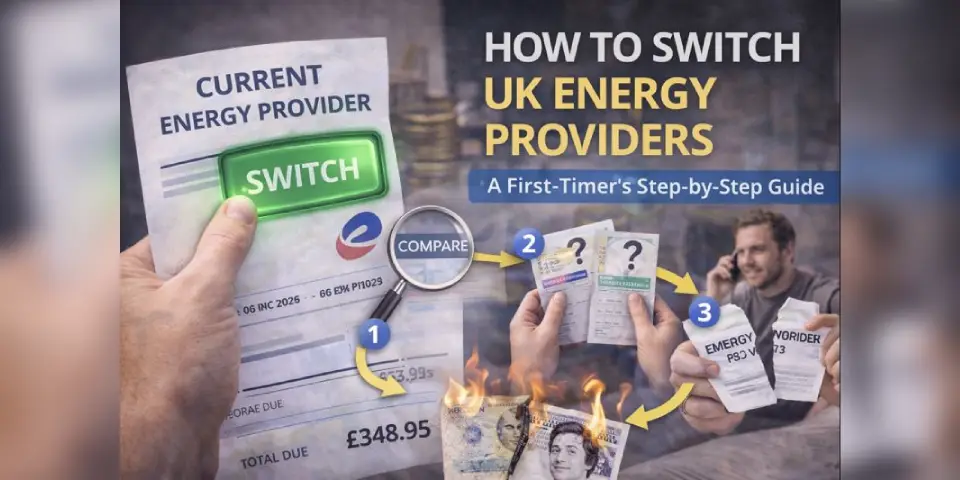
Switching energy providers in the UK is usually straightforward — but as a newcomer, the confusing part is everything around it: tariffs, standing charges, meter types, timing, and the final bill.
This guide gives you a safe, step-by-step switching process designed to reduce the two biggest problems people face:
- Incorrect opening/closing meter readings (leading to wrong bills)
- Switch delays or blocked switches (often caused by admin mismatches)
By the end, you’ll know exactly what to do before, during, and after your switch.
Key Lessons
-
Know Your Setup First (so you don’t waste time)
- Are you allowed to switch (rent + bills situation)?
- What meter type do you have (smart / credit / prepay)?
- Do you have electricity only or dual fuel (gas + electric)?
-
Compare Tariffs Properly
- How to read unit rate vs standing charge
- Why “estimated annual cost” can be misleading
- What matters more for low-usage vs high-usage homes
-
Switch Safely (and protect yourself from billing errors)
- What you must record on switch day
- How long it normally takes
- What to check on the final bill
Tools & Frameworks
- A “Switch File” (simple notes you keep)
- Meter-reading photo evidence (your best protection)
- A checklist to avoid common mistakes
Why It Matters
- Save money by finding a better tariff fit
- Avoid stress caused by surprise bills and admin confusion
- Build confidence in the UK utilities system (especially if you’re new)
Practical Exercise
Do a “dry run” before you switch:
1) Gather your details (10 minutes)
- Your exact address and postcode (as shown on your bill)
- Current supplier name (if you know it)
- Current meter readings (photo + written note)
- Payment preference (direct debit usually offers better tariffs)
2) Identify your meter type (5 minutes)
- Credit meter (pay after usage)
- Smart meter (still credit or prepay mode)
- Prepayment meter (top-up key/card/app)
3) Compare two tariffs correctly (15 minutes)
For each tariff, write down:
- Electricity unit rate (p/kWh)
- Electricity standing charge (p/day)
- Gas unit rate (p/kWh), if applicable
- Gas standing charge (p/day), if applicable
Then ask:
- Am I low-usage (standing charge matters more)?
- Am I high-usage (unit rate matters more)?
The Step-by-Step Switching Plan
Step 1: Confirm you can switch
- If bills are included in rent, you typically can’t switch.
- If you pay the supplier directly, you normally can switch.
Step 2: Apply with your chosen supplier
During signup:
- Use the exact address format
- Enter readings carefully (or choose “I don’t know” if you truly don’t)
- Save confirmation emails/messages
Step 3: Switch day = reading day (most important step)
On the day the supplier changes:
- Take fresh meter readings
- Take photos (time-stamped if possible)
- Submit readings if requested
Step 4: Final bill checks
When the old supplier closes your account:
- Make sure the closing readings match your evidence
- Confirm your refund (if in credit) or payment (if in debit) is correct
- Keep records until everything is settled
Common Problems (and what to do)
“My switch is delayed”
Common causes:
- Address mismatch
- Meter serial number mismatch
- Admin errors
What to do:
- Contact the new supplier first (they want your business)
- Confirm meter serial numbers from the meter itself
- Keep conversations in writing where possible
“My final bill is too high”
Most often caused by incorrect closing readings.
What to do:
- Send your photo readings
- Ask the supplier to rebill using your readings
- If unresolved, raise a formal complaint
“I’m on prepay—can I still switch?”
Yes, but it can be more complex.
What to do:
- Confirm the new supplier supports your meter type
- Ask what happens to any existing credit/debt on the meter
- Keep top-up receipts until the switch is complete
Next Steps
- How to Read Your UK Energy Bill (Line-by-Line)
- Standing Charges Explained (and why they vary by region)
- Fixed vs Variable Tariffs: What Makes Sense for Newcomers