
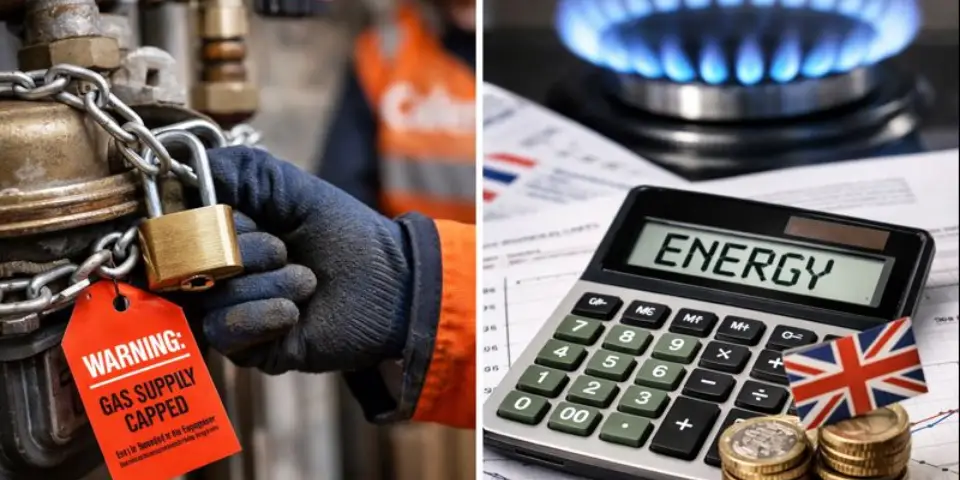
Within weeks of arriving in the UK, my gas was completely shut off by a company I’d never heard of.
I had no heating, no hot water, and absolutely no idea why this was happening.
What if I told you this happens to thousands of UK newcomers every year — and it’s completely preventable?
Here’s exactly what happened to me, and how you can avoid the same £110 mistake.
Reading Time: 8 minutes
The Situation
Few weeks after moving to the UK in October 2025, I woke up one morning to discover my prepaid gas had run out even after a significant top up. I thought something was wrong, though now i realise my reaction was probably too hasty. As a complete newcomer, I thought this was straightforward - just switch to a different supplier, right? That’s what you’d do in most countries.
I called Utility Warehouse (my current supplier at the time) but they were unavailable being a weekend. So i called any other random provider which turns out to be British Gas and told them I wanted to switch providers. They said that was fine and gave me some information about the switching process. I felt relieved - problem solved!
The next morning, I got a knock on my door. An engineer from a company I’d never heard of - Cadent - was standing there with equipment. He said he needed to check my gas system due to a “safety concern.”
Within 30 minutes, my gas supply was completely capped. The engineer handed me a technical report, told me to give it to my landlord, and left. No gas. No heating. No hot water. And worst of all - I had absolutely no idea what had just happened or why.
I was confused, frustrated, and honestly a bit angry. Who was Cadent? Why did they have the authority to cap my gas? Why didn’t British Gas warn me this could happen? And most importantly - how was I supposed to get my gas back?
This is the story of what I learned about the UK gas system the hard way, and how you can avoid making the same expensive mistake I did.
What I Didn’t Know (But Now Do)
After hours of panicked research (and several frantic phone calls), I finally understood what had happened. The UK energy system works completely differently from what I was used to, and there are three distinct layers that most newcomers don’t know about.
The Three-Layer UK Energy System
According to Ofgem (the UK’s energy regulator), the gas system has three separate entities:
1. Your Supplier (British Gas, Octopus Energy, etc.)
- This is who you pay your bills to
- They buy gas at wholesale and sell it to you
- They handle billing and customer service
- You can switch between suppliers freely
2. The Network Operator (Cadent, SGN, Wales & West, Northern Gas Networks)
- They own and maintain the physical gas pipes in your area
- They’re responsible for safety of the network
- They respond to gas leak reports
- You cannot choose or change your network operator - it depends on where you live
3. National Grid
- Manages the high-pressure national transmission system
- Most consumers don’t interact with them directly
Who Is Cadent?
Cadent is the UK’s largest gas distribution network, serving 11 million homes across:
- West Midlands
- North West England
- East of England
- North London
They own and maintain over 82,000 miles of gas pipes. When I called British Gas about switching, the system automatically flagged my address as having a potential gas safety issue (probably because I was on prepaid and the credit had run to zero, which can indicate abandonment or problems).
British Gas has to notify the network operator (Cadent in my case) about any potential safety concerns. Cadent then has a legal obligation under the Gas Safety (Installation and Use) Regulations 1998 to investigate.
The Critical Thing I Didn’t Understand
Here’s what I wish someone had explained to me clearly:
Network operators like Cadent have independent safety authority. They can cap your gas supply if they:
- Detect (or are told about) a potential gas leak
- Find unsafe appliances or installations
- Identify any risk to gas safety
- Receive a report from your supplier about concerns
According to Citizens Advice, network operators can cap gas supplies without the homeowner’s or tenant’s explicit permission if they believe there’s a safety risk. This is to prevent potential gas explosions or carbon monoxide poisoning.
When I called British Gas about switching, they probably flagged my account as “prepaid meter ran to zero - possibly unsafe.” Cadent had to investigate, and their policy is: when in doubt, cap it.
The Resolution
Once I understood the system, I knew what I had to do. Cadent’s policy is crystal clear: they cap, but they don’t uncap. Only a Gas Safe registered engineer can remove a cap.
The Steps I Took:
1. Called Cadent to understand why (Day 1)
- They explained the safety concern
- Said I needed a Gas Safe engineer to inspect
- Gave me the reference number from the cap
2. Contacted my landlord (Day 1)
- Explained the situation
- Asked if they had a regular Gas Safe engineer
- They gave me contact details
3. Booked Gas Safe engineer (Day 2)
- Explained I needed gas safety inspection and cap removal
- Cost quoted: £85 for callout + inspection
- Earliest appointment: 3 days away
4. Engineer inspection (Day 5)
- 45-minute full system check
- Result: No gas leak at all
- The “leak” Cadent detected was actually a designed safety pressure relief vent on my boiler
- This is standard on many UK boilers - it’s supposed to vent!
- Engineer removed cap and certified system safe
5. Paperwork to Cadent (Day 6)
- Sent Gas Safe certificate to Cadent
- System marked as “Resolved - Safe”
- Case closed
The Real Cost:
- Engineer fee: £85
- Days without gas: 5 days
- Heating alternative (electric heater): ~£25 in extra electricity
- Total financial cost: £110
- Stress and confusion: Priceless (and awful)
The engineer told me something that really bothered me: This happens all the time to people on prepaid meters, especially newcomers. Many boilers have these safety vents that can be mistaken for leaks by automated systems or overly cautious engineers.
How to Avoid This (Action Steps)
After going through this frustrating experience, here’s what I wish I’d known and what you should do if you’re in a similar situation.
Before Issues Arise:
1. Know Your Network Operator
- Check your postcode at the Energy Networks Association site
- Save their emergency number in your phone
- Understand they’re separate from your supplier
2. If You Have Prepaid Gas:
- Keep emergency credit topped up (£5-10)
- Never let it run completely to zero
- Understand that zero credit can trigger safety flags
- Top up regularly even if you’re planning to switch
3. Understand Your Boiler:
- Ask your landlord or previous tenant about the boiler
- Check if it has a pressure relief valve (PRV) - most do
- Know that these vents are normal and release pressure/steam
- They often look like small pipes outside with occasional drips
4. Keep Essential Contacts:
- Landlord (with response time expectations)
- Gas Safe registered engineer (ask landlord for recommendation)
- Your network operator’s number
- Your energy supplier’s number
If Your Gas Gets Capped:
1. DON’T Panic or Act Rashly
- Trying to switch suppliers won’t help (I learned this the hard way)
- Don’t try to remove the cap yourself (it’s illegal and dangerous)
- Don’t blame the engineer who capped it - they’re following safety protocols
2. Call the Network Operator
- Get the reference number from the cap notice
- Ask for specific reason for capping
- Ask what evidence they need to uncap
- Request all documentation via email
3. Contact a Gas Safe Engineer
- Not just any handyman - must be Gas Safe registered
- Explain: “I need a gas safety inspection and cap removal”
- Get written quote before they come
- Typical cost: £75-120 for inspection
4. Document Everything:
- Photos of the cap
- Cadent’s report/reference number
- Gas Safe engineer’s certificate
- All costs incurred
- Timeline of events
5. Know Your Rights: According to Citizens Advice:
- Network operators must act on safety concerns
- You’re responsible for paying for inspection if no fault found
- If there was no actual risk, you can’t claim compensation for the cap itself (safety first)
- But you can claim for any genuine damage or losses if the process was unreasonably delayed
For Newcomers Specifically:
The UK system is different from most countries:
- There are MORE entities involved (supplier, network, national grid)
- Safety regulations are VERY strict (which is good!)
- Prepaid meters have MORE oversight and safety checks
- Network operators have INDEPENDENT authority (they don’t need your permission for safety actions)
When in doubt:
- Call Citizens Advice: 0808 223 1133
- Contact your university/employer if they have housing support
- Join newcomer forums where others share similar experiences
Resources That Helped Me
After this experience, I compiled all the resources that actually helped me understand and resolve the situation.
Official Sources:
Ofgem (Energy Regulator):
- Understanding your gas network - Explains the three-layer system
- Gas emergency contacts - By region
Cadent:
- About Cadent Gas - Who they are, what they do
- Emergency number: 0800 111 999 (24/7 gas emergency line)
- Network map - Check if you’re in Cadent area
Gas Safe Register:
- Find a Gas Safe engineer - Official register
- Check engineer credentials - Verify they’re legitimate
Citizens Advice:
- Gas safety problems guide
- Free advice line: 0808 223 1133
GOV.UK:
- Gas Safety Regulations - Legal framework
- Tenant rights regarding gas safety
Community Resources:
MoneySavingExpert Forums:
- Energy forum - Active community discussing UK energy issues
- Search “Cadent gas cap” or “gas capped” - you’ll find dozens of similar stories
Reddit:
- r/UKPersonalFinance - Search “gas capped” or “Cadent”
- r/LegalAdviceUK - For rights questions
Comparison Tools (When You’re Ready to Switch Properly):
After this experience, when I was ACTUALLY ready to switch (and my gas was safely working), I used:
- Energy Helpline - Compare all UK suppliers
- USwitch - Another comparison site
- MoneySuperMarket Energy - Third option for comparison
Note: These are affiliate links. If you use them to switch, I may earn a small commission at no cost to you. I only recommend tools I actually used and found helpful.
Key Takeaways
What I learned from this expensive and stressful experience:
The System Lessons:
-
The UK energy system has three separate layers - Supplier, network operator, and national grid. Most newcomers (including me) don’t know this.
-
Network operators have independent safety authority - Cadent, SGN, and others can cap your gas without your permission or your supplier’s permission if they believe there’s a safety risk.
-
“Leaks” aren’t always leaks - Many boilers have designed pressure relief vents that release steam/pressure. These are normal and safe, but can be mistaken for leaks.
-
Prepaid meters attract more safety scrutiny - When credit runs to zero, it can trigger automated safety checks. Keep credit topped up.
The Practical Lessons:
-
Never let prepaid gas run completely to zero - Top up when you hit £5-10 remaining
-
Know the difference between your supplier and network operator - They have completely different roles and powers
-
Keep Gas Safe engineer contact information - You’ll need one eventually for annual checks anyway
-
Don’t try to switch suppliers when you have active issues - Resolve problems first, then switch
-
Document everything always - Photos, reference numbers, emails, costs
The Emotional Lessons:
-
This happens to thousands of UK newcomers - You’re not alone, you’re not stupid, the system IS confusing
-
The UK takes gas safety extremely seriously - This is actually good! But it means strict procedures
-
Network operators are doing their job - Even when it feels excessive, they’re preventing potential disasters
-
Having local support is essential - Landlords, universities, employers - use your resources
If This Happens to You:
Take a breath. It’s frustrating, but it’s solvable. The gas will come back on. You’ll understand the system better. And honestly? You’ll have a great story about your first month in the UK (even if it doesn’t feel great while it’s happening).
I spent £110 and 5 days without gas, but I learned exactly how the UK energy system works. Now I’m sharing that knowledge so hopefully you don’t have to learn it the hard way like I did.
What I’m Doing Next
This experience kicked off my journey into understanding UK utilities and cost of living. I decided if I was going to live here, I needed to actually understand how everything works - not just stumble through and hope for the best.
Coming soon on Living Smart UK:
- How I researched and compared all 30+ UK energy suppliers by customer service data
- The step-by-step guide to switching UK energy providers (the RIGHT way)
- What I learned from 5 years of UK energy price cap data
- My complete first UK energy bill explained line-by-line
If you’re also new to the UK or confused by the utilities system, subscribe to my newsletter for weekly research-driven breakdowns.
Related Content
- Coming Soon: “How to Switch UK Energy Providers - Complete First-Timer’s Guide”
- Coming Soon: “My First UK Energy Bill Made No Sense - I Researched Every Line”
- Coming Soon: “UK Energy System Explained - The Three Layers Newcomers Don’t Know”
Have you dealt with gas capping or similar UK energy confusion as a newcomer? I’d love to hear your story. Drop a comment below or email me - your experience could help others.
About Living Smart UK: I moved to the UK in October 2025 and was immediately confused by the utilities system. After this Cadent gas capping incident (and other newcomer mistakes), I decided to research everything thoroughly and share what I learn. If you’re also new to the UK or just feel overwhelmed by the systems here, you’re in the right place. Not an expert - just someone researching thoroughly and sharing honestly.